You don’t need a full renovation, expensive soundproofing, or a recording studio budget to make a room sound better. In fact, some of the biggest acoustic improvements come from small, clever tweaks that most people overlook.
If your home office echoes during video calls, your living room feels noisy even when it’s not crowded, or your office sounds constantly busy and distracting, acoustic panels can make a noticeable difference fast. The trick is knowing how to use them properly.
These acoustic panel hacks are practical, realistic, and surprisingly effective. Whether you’re working with a small HDB-style room, a compact office, or an open-plan space, these ideas can help you improve sound almost instantly.
1. Start Where the Sound Hits First (Not Where It Looks Best)
One of the most common mistakes people make is placing acoustic panels where they look good, not where they actually work.
Sound doesn’t bounce randomly. It reflects off the first hard surfaces it meets, usually walls directly opposite speakers, desks, or seating areas.
In a home office, this is often the wall behind your computer screen. In a meeting room, it’s the wall opposite the main table. In a living room, it’s often the wall facing the TV or speakers.
Hack this by standing in the main listening or working position and clapping your hands. Where you hear the strongest echo coming back from is where your first panel should go. Even adding one or two panels in these “first reflection points” can dramatically clean up sound.
2. Don’t Overdo It — Less Can Sound Better
It’s tempting to think more panels equals better acoustics. In reality, too many panels can make a room feel flat and lifeless.
The goal isn’t silence, but balance.
If a room feels harsh and echoey, you only need enough panels to soften reflections, not absorb every sound. A few well-placed panels can make voices clearer and reduce fatigue without making the space feel dull.
A good rule of thumb is to treat about 20–30 percent of the reflective surfaces in a room. Start small. You can always add more later.
3. Use Ceiling Panels to Fix Problems Without Rearranging the Room
If your walls are already full of shelves, windows, or artwork, ceiling-mounted acoustic panels are your best friend.
Sound loves to bounce upward, especially in rooms with hard floors and high ceilings. Ceiling panels absorb those reflections without interfering with your layout or décor.
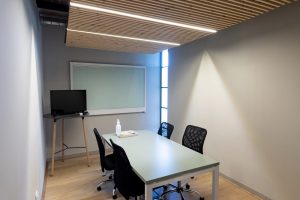
This works incredibly well in offices, meeting rooms, and open-plan homes. Even a few suspended or flush-mounted ceiling panels can reduce overall noise levels and make the space feel calmer almost immediately.
It’s one of the fastest upgrades with the least disruption.
4. Turn Panels into Design Features (So They Don’t Feel Like a Fix)
Acoustic panels don’t have to look like an afterthought.
Many modern panels come in different shapes, colours, and textures, which means you can use them as part of your design rather than trying to hide them.
In homes, panels can act like wall art behind a sofa or bed. In offices, they can be arranged in clean geometric patterns that look intentional and modern.
This hack works especially well in spaces where people worry panels will make the room look “too technical”. When panels look good, people stop noticing them — but they still feel the difference.
5. Fix Video Call Echo with One Simple Panel Placement
If your video calls sound echoey or hollow, you don’t need to treat the entire room.
The fastest fix is placing an acoustic panel behind you, just out of camera view. This absorbs the sound of your voice before it reflects back into the microphone.
If you want to go one step further, add another panel on the ceiling above your desk. This combination often solves echo issues instantly, even in small rooms.
It’s a simple hack that makes you sound clearer, more professional, and easier to listen to — without changing your setup.
6. Combine Panels with Soft Furnishings for Maximum Impact
Acoustic panels work best when they’re part of a bigger sound strategy.
Rugs, curtains, upholstered furniture, and bookshelves all help absorb sound naturally. When combined with panels, the effect multiplies.
For example, a rug on the floor plus panels on one wall and the ceiling can completely change how a room sounds. The space feels warmer, calmer, and far less tiring to be in.
This is especially useful in homes, where you don’t want the space to feel overly treated or commercial.
7. Use Panels to Create Peaceful Zones in Open Spaces
Open-plan layouts are great visually, but acoustically, they can be challenging. Sound travels everywhere, and it’s hard to focus.
Instead of trying to treat the entire space, use acoustic panels to define calmer zones. Panels above a desk area, reading corner, or meeting table can reduce noise spill without adding walls.
This works brilliantly in shared offices, co-working spaces, and even living-dining areas at home. You’re not blocking sound completely, just softening it where it matters most.
8. Panels Work Best at Ear Height (Most of the Time)
While ceiling panels are excellent, wall-mounted panels are most effective when placed roughly at ear height — where sound waves travel during conversation.
In meeting rooms or dining areas, panels at seated head height absorb speech reflections directly. In standing workspaces, panels slightly higher work better.
This small adjustment often makes panels far more effective than placing them too high or too low on the wall.
9. Fix Noisy Offices Without Shushing Anyone
One of the biggest benefits of acoustic panels is that they reduce noise without changing behaviour.
Instead of asking people to lower their voices or wear headphones all day, panels absorb excess sound naturally. Conversations stay private. Background noise fades into the background.
In offices, this improves focus without creating a tense or silent atmosphere. In homes, it reduces stress without making the space feel restrictive.
It’s an effective solution to a noisy problem.
10. You’ll Feel the Difference Before You Can Explain It
This might be the most interesting part.
People often notice improved acoustics emotionally before they notice them logically. The room feels calmer. Conversations feel easier. You feel less drained after spending time there.
That’s because good acoustics reduce mental effort. Your brain doesn’t have to work as hard to process sound.
It’s one of those upgrades that improves daily life in subtle but meaningful ways.
Final Thoughts
Acoustic panels don’t need to be complicated, expensive, or overwhelming. With a few smart hacks and thoughtful placement, you can dramatically improve how your home or office sounds — sometimes in a single afternoon.
Start small. Place panels where sound reflects first. Use ceilings when walls are limited. Blend panels into your design. Combine them with soft furnishings. And always focus on how the space is actually used.
Because when a room sounds better, everything feels better — work, conversations, focus, and comfort included.