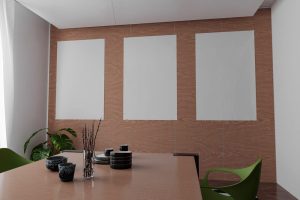

designed for visual appeal, concealment, and basic functionality. They are commonly used in offices, malls, schools, and residential spaces across Singapore.
Common Types of Regular Ceiling Panels
- Gypsum boards
- PVC ceiling panels
- Metal ceiling tiles
- Laminated or decorative panels
These panels are excellent for:
- Creating clean, uniform ceilings
- Hiding wiring, ducts, and air-conditioning systems
- Improving lighting layout and airflow
- Meeting fire or moisture resistance requirements
However, from an acoustic perspective, most regular ceiling panels are hard and reflective. This means they allow sound to bounce freely around the room, contributing to echo rather than reducing it.
In short, regular ceiling panels are about how a room looks, not how it sounds.
What Are Acoustic Ceiling Panels?
Acoustic ceiling panels are designed with one specific purpose in mind: controlling echo and reverberation.
Again, it’s important to be clear. These panels do not absorb sound in the sense of blocking noise. Instead, they absorb reflected sound energy, preventing it from bouncing repeatedly around the room.
They typically use materials such as:
- Mineral fibre
- Fabric-wrapped absorptive cores
- Perforated boards with acoustic backing
- Specialised foam or composite materials
These materials trap and dissipate sound reflections, helping voices, music, and ambient noise sound clearer and more balanced.
Key Differences Between Acoustic and Regular Ceiling Panels
1. Purpose: Sound Control vs. Surface Finish
The biggest difference lies in intent.
Regular ceiling panels are installed to:
- Improve aesthetics
- Conceal services
- Create a clean architectural finish
Acoustic ceiling panels are installed to:
- Reduce echo
- Improve speech clarity
- Make rooms more comfortable to use
In Singapore offices, for example, a beautifully finished ceiling may still result in poor meeting-room acoustics if sound reflections aren’t controlled.
2. Material Composition
Regular ceiling panels are typically solid and smooth. Sound hits them and reflects straight back into the room.
On the other hand, acoustic ceiling panels are intentionally porous or perforated. This allows sound energy to enter the panel, where it is dissipated rather than reflected.
This difference is crucial in spaces such as:
- Open-plan offices
- Conference rooms
- Classrooms
- Studios
- Living rooms with high ceilings
3. Impact on Sound Quality
Regular ceiling panels:
- Do not reduce echo
- Can make a room feel louder and more tiring
- May worsen speech clarity in busy environments
Acoustic ceiling panels:
- Shorten reverberation time
- Make voices clearer without increasing volume
- Reduce listening fatigue over long periods
This is particularly valuable in Singapore, where many spaces are used continuously throughout the day.
4. Comfort and Productivity
Poor acoustics don’t just sound bad. They affect how people feel and perform.
In echoey spaces:
- Conversations feel strained
- People talk louder without realising it
- Concentration drops
- Fatigue sets in faster
Acoustic ceiling panels help create environments that feel calmer and more controlled, which improves:
- Workplace productivity
- Learning outcomes
- Customer comfort
- Overall user experience
Where Regular Ceiling Panels Make Sense
Regular ceiling panels still have an important role. They are ideal when:
- Acoustics are already well-managed through other means
- The space is small and well-furnished
- Visual design is the main priority
- The area is not used for extended conversations
Examples include:
- Corridors
- Storage rooms
- Toilets
- Low-traffic utility spaces
In these situations, acoustic treatment may not be necessary.
Where Acoustic Ceiling Panels Make a Big Difference
Acoustic ceiling panels shine in spaces where people talk, listen, teach, or record.
Offices and Meeting Rooms
In Singapore offices with glass walls and hard floors, ceiling panels often provide the missing piece in acoustic control. They reduce echo without changing layouts or adding bulky wall treatments.
Classrooms and Tuition Centres
Speech clarity is critical in learning environments. Acoustic ceiling panels help students hear instructions clearly and reduce teacher fatigue.
Studios and Media Rooms
Recording spaces rely heavily on ceiling treatment to control reflections, especially in smaller studios or home setups.
Homes with High or Open Ceilings
Living rooms with double-height ceilings or minimal furnishings often sound echoey. Ceiling panels help make TV audio, conversations, and music feel more natural.
Can You Combine Both Types?
Absolutely. In fact, this is often the best solution.
Many Singapore spaces use:
- Regular ceiling panels for structure and design
- Acoustic ceiling panels in selected zones for sound control
For example:
- Acoustic panels above meeting tables
- Regular panels in surrounding areas
- A mix of wall and ceiling treatments for balanced acoustics
This approach keeps costs under control while targeting problem areas effectively.
Common Misconceptions About Acoustic Ceiling Panels
“They will make my room silent”
They won’t. The acoustic ceiling panels reduce echo, not sound itself. You’ll still hear conversations and activity — just more clearly and comfortably.
“I only need wall panels”
Walls help, but ceilings are often responsible for lingering echo. Ignoring the ceiling can limit results.
“They ruin the look of the space”
Modern acoustic ceiling panels come in sleek, minimal designs and can blend seamlessly into contemporary interiors.
Cost Considerations in Singapore
Acoustic ceiling panels may cost more upfront than regular ceiling panels, but they often save money long-term by:
- Reducing the need for additional renovations
- Improving productivity and comfort
- Lowering reliance on sound systems
- Preventing acoustic issues from escalating
In leased offices or commercial spaces, they are also less disruptive than structural changes.
How to Choose the Right Option
Ask yourself:
- Does the room feel echoey or tiring to be in?
- Is speech clarity important in this space?
- Are there many hard surfaces?
- Is the ceiling large or high?
If the answer is “yes” to most of these, ceiling panels are worth considering.
Final Thoughts
Acoustic ceiling panels and regular ceiling panels serve very different purposes. One focuses on how a room looks, the other on how a room sounds.
In Singapore’s dense, modern interiors, sound quality plays a bigger role than many people realise. Echo affects productivity, comfort, and communication, often without anyone noticing until it becomes a problem.
Understanding that acoustic ceiling panels absorb echo rather than sound helps set the right expectations and leads to better design decisions. When used thoughtfully, they transform noisy, tiring spaces into environments that feel calmer, clearer, and far more efficient.